Forest Restoration, Rehabilitation and Community Conservation
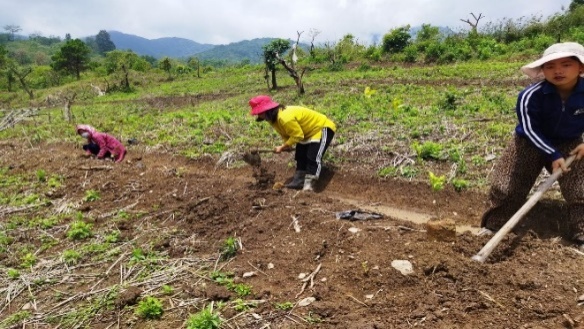
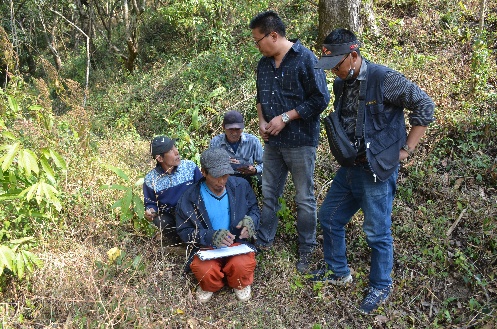
The COSFOM Project supports forest restoration and rehabilitation through seven distinct forest models, each designed to respond to local ecological conditions and community needs. Sites for restoration were identified through Participatory Land Use Planning (PLUP) conducted at the beginning of the Project.
Together, these models combine active tree planting with approaches that encourage and protect natural forest regeneration.
COSFOM Forest Models
|
No.
|
Forest Model ID
|
Planting density
|
|
1
|
Mixed Species Afforestation (F-AF)
|
1100
|
trees / ha
|
|
2
|
Riparian Buffer Afforestation (Model R-AF)
|
1333
|
trees / ha
|
|
3
|
Aided Natural Regeneration (F-ANR)
|
200
|
trees / ha
|
|
4
|
Riparian Buffer Aided Natural Regeneration (R-ANR)
|
600
|
trees / ha
|
|
5
|
Jhum Conservation Buffer (J-CB)
|
440
|
trees / ha
|
|
6
|
Forest Area Closure (F-AC)
|
|
–
|
Community Nurseries
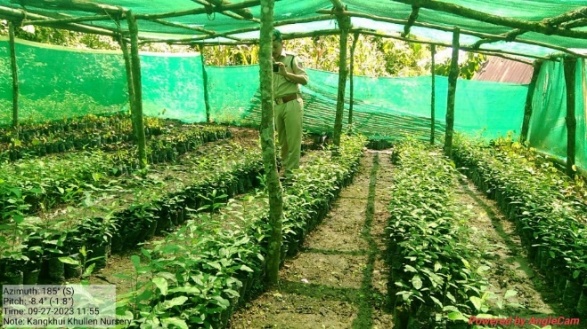
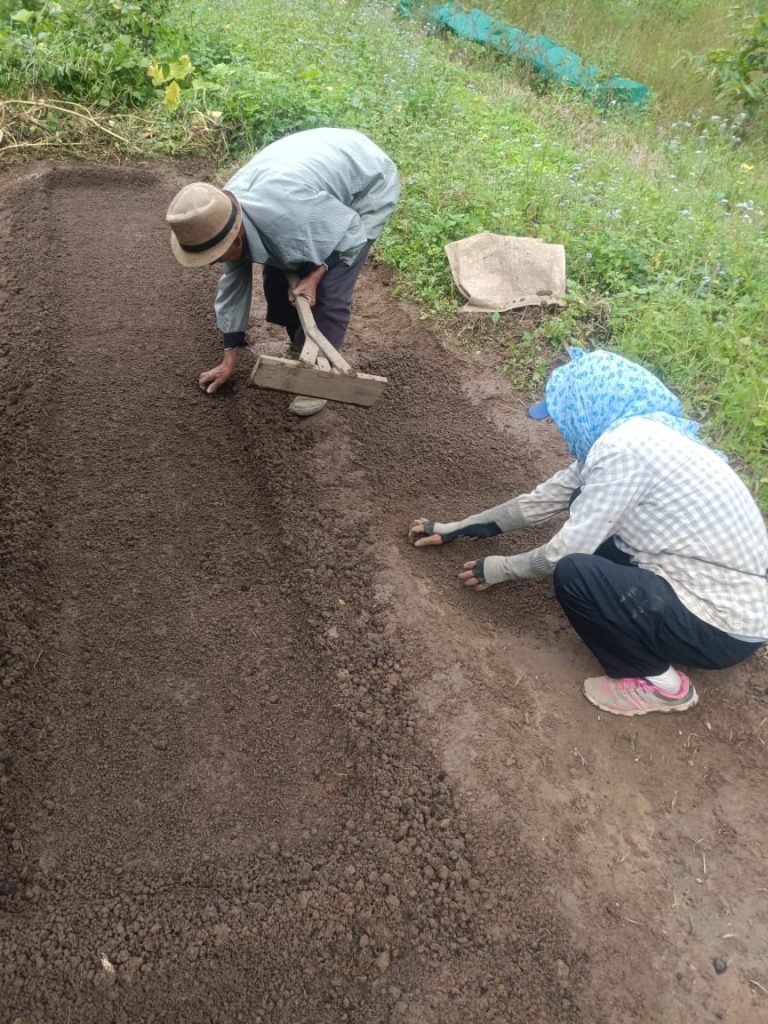
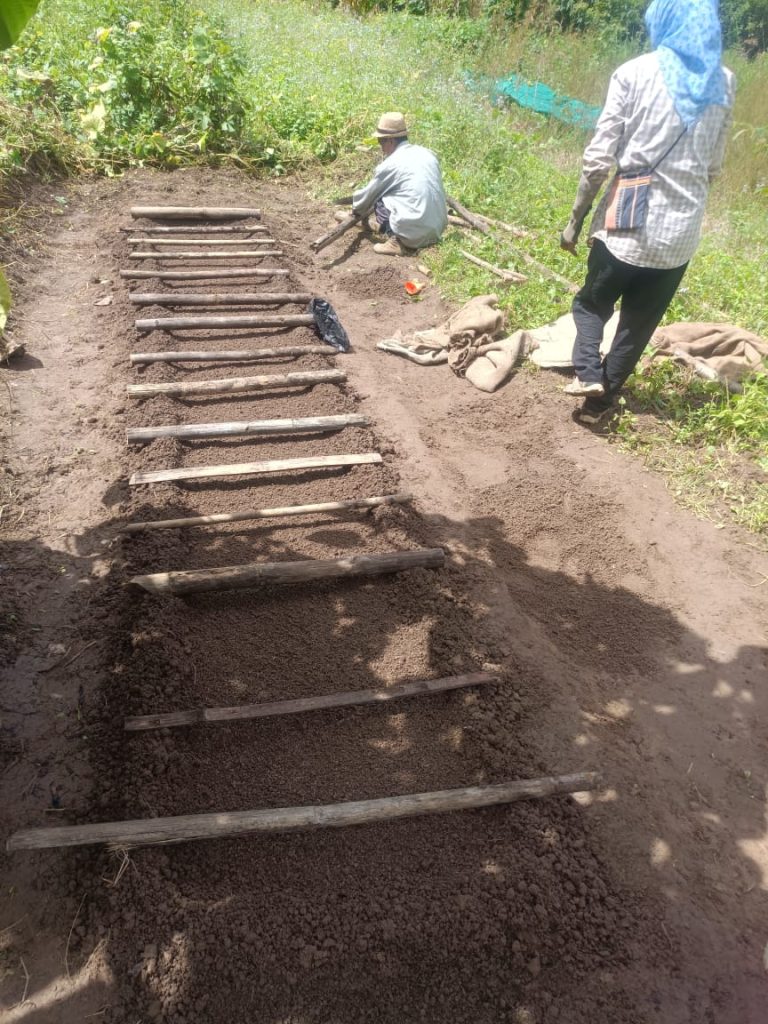
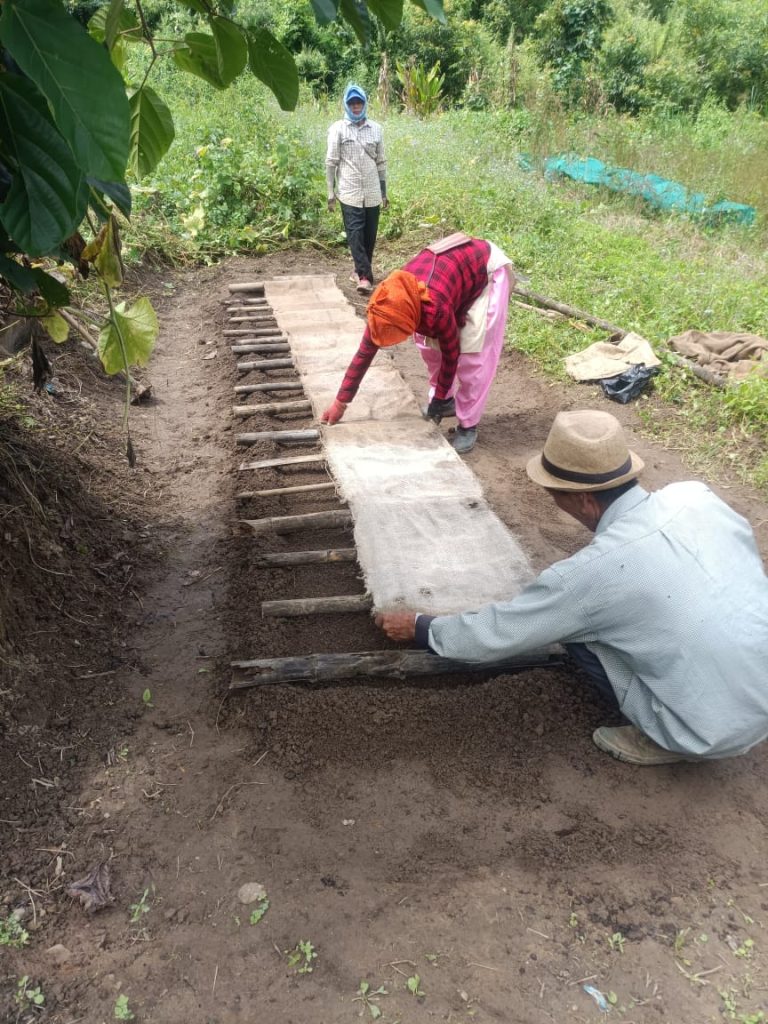
The Project began by supporting community-managed nurseries, enabling local communities to produce tree saplings for planting in village forest areas. This approach strengthens local ownership while ensuring that planting material is readily available within the communities.
To support the remaining afforestation targets beyond the Project period in 2027, two cluster nurseries have been established in Ukhrul. The nurseries are continuously monitored and supported through technical guidance from the Division Forest Office.
Village-Based Forest Protection and Patrolling
Within designated Forest Area Closures (FACs), existing natural forests are protected from logging, land conversion and hunting. Community patrol teams play a central role in this protection effort by conducting regular field monitoring.
Patrolling is supported through app-based spatial reporting, with patrol reports and GPS tracks submitted digitally to the Project Management Unit (PMU) and integrated into the Project’s patrol database. Monthly and quarterly patrol reports are reviewed and used to provide feedback to village patrol teams, helping strengthen forest protection and improve monitoring over time.
Community Conserved Areas and Biodiversity Monitoring
The Project also supports communities in strengthening their efforts to conserve forests and wildlife. Under Section 36C of the Wildlife (Protection) Act, 1972, the State Government may declare private or community land as a Community Reserve where communities or individuals voluntarily commit to conserving wildlife, habitats, flora, fauna and traditional or cultural conservation values and practices.
Building on voluntary hunting bans initiated and enforced by village youth and endorsed by Village Authorities, the Project will support up to four of these community-led conservation initiatives through the development of Community Conserved Area (CCA) management plans.
As part of CCA management, the Project is introducing community-based biodiversity monitoring using modern camera-trapping techniques. Trained village patrol teams are learning to independently install, operate and monitor camera traps, enabling communities to generate and use biodiversity information to strengthen local conservation efforts.